Showing posts with label Personal. Show all posts

Tuesday, December 10, 2024

Musings of an Arthritic Artist: Life Update #1

Welcome back to Musings of an Arthritic Artist! Today's post is going to be a bit different than my usual posts and my posts as of late. 


Today I'm going to be doing a life update post. Basically, I'm going to be talking about what's been going on in my life.


Without further ado, let's get into the post!


So, it's been a while. I haven't written or posted a single blog post since April. And before then, I hadn't posted since April 2023. A lot has happened since then, so I'm going to get into that. Since I'm doing an update that covers summer 2023 to now, this will be a pretty long blog post, but please, bear with me.

--------------------------------------------------------------

In July of 2023, on a personal family business trip, I began to have more noticeable balance issues. I've had balance issues on and off since I was a child, but it became more prominent. It became so disruptive that I began to require my sister's arm as a mobility aid. I told myself that I would wait it out, see what happened. See if it improved. If not, then I'd take further measures.

After about a month, it hadn't really improved. Right before mine and my family's showing of Blue Beetle (we ended up seeing it opening day, so August 18, 2023), I asked my mom if she and my dad could buy me a cane. I had already been looking at some on Amazon, and I had determined that I had wanted a foldable one.

I had actually been wondering if I would benefit from a cane long before this conversation ever happened. But when I'd first been wondering about it, I didn't feel as if my issues were severe enough to warrant one. But I had first began thinking about a cane in 2022 sometime. I didn't feel as if it was an immediate, pressing issue though, so I put that thought on the back burner.

Until August 2023 when I realized that enough was enough. We ordered a cane and two cane handle walking sticks the very next day. Both arrived on August 28th, and I began using them immediately. I began to see improvement with my ability to walk. 

The design I liked came two different ways, depending on how you ordered them. One has the single top most canes are seen having. The other type had a rubber quad base. Due to the nature of my balance issues and the ability for them to stand by themselves, I decided to go with the rubber quad base cane.

I no longer needed to rely on my sister to help me walk. I could walk independently, not having to worry if there was someone standing beside me for me to grab the arm of in case I started falling over.

On September 1st, my mom decided to order me the other two cane designs of the exact cane I'd gotten, so I'd have 'options'.

Gladiola and Vincent, my two cane handle walking sticks

From left to right: Flora, Kalil, and Izara, my foldable quad canes

--------------------------------------------------------------

Last December, my family and I went to San Diego, specifically to SeaWorld San Diego. San Diego has a lot of hills, and I was struggling to walk, even with the cane handle walking sticks that I was using. I remember sitting down and talking to my sister and talking about how a wheelchair would be very good at a park like that, and even the rest of San Diego due to the inclines. She agreed with me, and we were both looking at wheelchairs on Amazon, because she was wondering how much they cost. 

Months later, I brought up the topic to my mother. We began talking about it. I mentioned how it would benefit me, and we both agreed that we would look into it. 

During the first week of April, I went to see my primary doctor, and I asked for a wheelchair prescription. Turned it in to a local medical supply place and ended up picking up my wheelchair pretty much the day right before my family and I left on our June trip to Las Vegas and San Diego.

My prescription wheelchair

--------------------------------------------------------------

Another update is that I no longer have just one diagnosis. And many months ago, I figured out that I never had only one diagnosis. While going through my medical records earlier this year, I uncovered that around the time I was diagnosed with JIA, I was also diagnosed with infantile scoliosis. Specifically mild thoracolumbar levoscoliosis. This scoliosis was also found on an imaging test that was taken when I was seven, but I was never aware of this, nor were my parents. But I have a mild curvature in the thoracolumbar section of my spine that curves towards the left (levoscoliosis).

Earlier this year, I had been experiencing a lot of back pain. Pretty much on the daily. Every day from April 4th to at least May 30, I had back pain every single day. I also had knee pain daily during this time. 

I saw the nurse practitioner for an adult rheumatologist in April. The appointment went okay, but I wasn't really pleased. I was prescribed methylprednisolone, despite having low inflammatory markers, and I didn't end up taking those steroids. I ended up seeing a second rheumatologist.

In May, while seeing an adult rheumatologist who was supposed to be treating my JIA, I was diagnosed with fibromyalgia. 

I ended up seeing the first adult rheumatologist again in June, the day after I got back from being out of town. After that, I am not seeing him again. I wasn't satisfied with the care I received there. 

As for the second rheumatologist, the first appointment went relatively well, despite the rheumatologist pretty much telling me that my JIA diagnosis was a bogus diagnosis and seemingly doubting the doctor I received that diagnosis from. And then during that appointment, I was also diagnosed with hip bursitis and given two steroid shots, one in each hip. The doctor told me he wanted to see my medical records, because I was in the middle of trying to receive them from my pediatric hospital where I was being seen before. 

The next appointment though, I was discharged from his office and told that my primary doctor could treat my fibromyalgia, completely ignoring the arthritis I have because he found 'no evidence of RA, AS, or any connective tissue disease' despite my JIA being a connective tissue disease.

I haven't seen him since because he dismissed me and told me to only go back if my symptoms really got worse. But if I see an adult rheumatologist again (and I will have to because my main issues are rheumatology related), I will not be seeing him or the previous rheumatologist that I saw.

He did, however, bring up a new issue that I had to address: a fast heart rate.

--------------------------------------------------------------

In May, I had been prescribed four different things. Voltaren gel, for my knees, Celebrex, for my arthritis and fibromyalgia, Vitamin D2, and Duloxetine (Cymbalta), for my fibromyalgia.

I didn't take these, except for the Vitamin D2, at the time. That was because I didn't want to risk having an allergic reaction to any of these medications out of town, and it was also because I intended to have my very first alcoholic beverage in Las Vegas, due to turning 21 this year.

I began taking the Celebrex and Cymbalta about a week before my 2nd rheumatology appointment in July with the doctor who prescribed those. I stopped taking the Celebrex after 2 days because it caused me to get more heart palpitations than I usually get. 

The Cymbalta was working for my back pain. Finally, I was getting up and not feeling back pain every second of every day. It was nice. I started with a 60mg dose, or 30mg, twice daily. Which, when looking at recommended starting dosages for fibromyalgia, seems a bit high, considering the starter dose is usually 30mg, and then increased to 60mg if the patient's fibro responds to it well.

I started to get side effects from the Cymbalta. I had the usual, expected drowsiness side effect for the first 2 weeks. And then, I noticed gum changes. My dosage of Cymbalta was causing my gums to recede. But because I had already been on it for a while, I couldn't just quit the medication, especially not after such a high dose. If I quit it cold turkey, I would risk major withdrawal symptoms due to it being an antidepressant.

After a while, I lowered my dose to 30mg, once a day, by simply taking one less tablet a day. I saw my pediatrician for this issue and my dose was subsequently lowered to a 20mg dose, once daily, which was the lowest dose I could possibly take. 

After months of weaning off it, I finally stopped taking Cymbalta on November 3rd.

While I was taking the Cymbalta, I was told I had a fast heart rate by my rheumatologist and my pediatrician. I ended up getting a pulse oximeter to keep a track of my heart rate.

During this heart rate issue, my family and I had been wondering if it was being caused by the Cymbalta. I found out that it actually wasn't because my resting heart rate was 99 beats per minute for my first rheumatology appointment in April. My heart rate was 98 beats per minute when I was told by my second rheumatologist in July. My heart rate was 2 off from being considered tachycardia in April.

My heart rate was not getting any lower with the Cymbalta, but it wasn't causing the issue.

In September I saw a cardiologist for a fast heart rate. When my father asked if my symptoms could be due to POTS (Postural Orthostatic Tachycardia Syndrome, which my family and I had been looking at previously), I was told it couldn't possibly be that because my blood pressure didn't change from lying down to sitting up. Which is inaccurate because the POTS diagnostic criteria has nothing to do with blood pressure, but I didn't push the issue. 

I was told that I'd have to have an echocardiogram to rule out heart disease, which was scheduled for about 3 weeks in the future. I was then told I'd have to have a follow up appointment to go over the echo results.

That appointment was originally scheduled for January because there were no sooner openings, but I was assured that there were always cancellations, so it'd be sooner than that. Sure enough, someone cancelled so my follow up was the day right after my echo.

That next day I walked out with a diagnosis of inappropriate sinus tachycardia. IST is a type of dysautonomia. Dysautonomia is the dysfunction of the autonomic nervous system, which controls involuntary body responses, like heart rate, blood pressure, respiration, digestion, body temperature, metabolism, etc. My echocardiogram had come back normal. I had no enlargements or other abnormalities.

--------------------------------------------------------------

During this year, I have also seen a neurologist twice, after I was referred due to having hand tremors. I had a genetic blood test in August, but I don't have the results of that, so for now, I'm not really discussing the neurologist. Nothing has been found, aside from the fact that my balance issues have been clinically confirmed. And I had multiple tests done to try to find the cause of the tremors and balance issues, to no avail so far.

--------------------------------------------------------------

I have been too busy with medical appointments and tests this year to really be able to post as much as I'd like, especially because I haven't really read many books (perhaps only 6-8 that I would consider reviewing here), nor have I really watched many movies.

I had at least 12 or so doctor's appointments this year. Had to do 3 MRIs, 3 EKGs, 3 X-Rays, an EEG, an EMG/NCV, an echocardiogram, 2 genetic blood tests, and 4 standard blood tests. All starting in March and ending in September. That's about 5 appointments and/or tests per month. So I've been slammed this year.

--------------------------------------------------------------

I've been meaning to be more active on my blog, and I hope to be more active this month and next year. I have a lot of reviews I can post here. For books, TV shows, and movies, and I'm really excited to post them. I'm also currently reading some books that I can review here. Overall, I'm really looking forward to continuing my blog because I have been active for too long.

That's it for this post! I hope you enjoyed it! 


See you Thursday, 


Lexi KšŸ–Œ

Thursday, August 11, 2022

How to Write a Death Scene

Welcome back to Musings of an Arthritic Artist! Today I'm going to be going over my tips to writing a death scene. 


There are spoilers for Thor: The Dark World, Thor: Ragnarok, Frozen, Harry Potter and the Deathly Hallows, The Titan's Curse, and City of Glass, which I use as examples.


Without further ado, let's get into the post! 

Today I'm going to be talking about how to write a death scene. I'm predominantly talking about novels, though this applies to any form of writing. 

I want to preface this by saying that I am not a professional nor published author (despite the fact that I have published two short stories onto my blog). However, in my semi-structured 5-6 years of writing (I have written for longer than that, but I started my first novel at 13-14) I have researched and have found some tips that are incredibly helpful.


1. Figure Out the Tone

The tone of the scene is largely what's going to shape how your readers are going to feel about the death itself. If it's your villain's death scene, maybe the characters are relieved. Write your tone that way.

If you're killing off a child, then you're likely going to want it to seem sad, sudden, and tragic. So write your tone accordingly. Tone is set with word choice. The type of words you use are incredibly important when writing tone in any scene, but death scenes in particular.

If the tone of the scene isn't written as you intended, you may get a reaction from readers--and maybe even yourself--that you didn't intend to get.


2. Make the Readers Care

In order for the death to mean something, the readers have to care about the character you're killing off. Sometimes this is direct, in that the audience cares about the character because they're likeable. 

Other times this is indirect, a situation where the audience cares about the killed-off character because one of the protagonists cares. In indirect situations though, the reader must first care about the protagonist. After that, they'll usually proceed to care about the character you've killed off.

This is a tip especially true for the characters in your story that are good. If the reader doesn't care about your character, they aren't going to care about that character's death. They're likely going to feel cheated.

This is where character development comes in. Show their personality. Show their interests, likes, and dislikes. Show their relationships with other characters. 

Make them feel like a person who has their own goals and desires. Make them three-dimensional. Make them feel like real people. This will usually make readers care about that character. 

And, make sure your character is either relatable or somewhat likeable. If your character isn't likeable, the reader may feel relieved or happy that that specific character died.

So make sure that if you have a character who is somewhat of an anti-hero, they have redeeming qualities.


3. Leave a Goal of Theirs Unfinished

There's nothing that saddens readers more than a character they like dying before they complete their goal. 

This goal could be large, or it could be small. Sometimes the smaller the goal, the more sad it is. But that isn't true in all cases. Sometimes the goal can be huge, and it's just as sad. Most of the time though small goals are the most effective at accomplishing this. 

This goal could be something as simple as seeing the ocean, or it could be as large as saving the world. It's really up to you and what your story is about.


4. Make Their Death Count

Nothing cheapens a death more than a resurrection scene. In some cases this works, but in most cases it doesn't, and it only succeeds in cheapening the character's death. 

This is especially true in cases where the main character watches that character die. Sometimes you can get away with it if the character 'died' off page and is presumed to be dead. These are the few instances where a character's 'death' may be 'erased.'

However those are very particular instances. We're talking about death scenes though, as in deaths that happen on page. 

The only instance where this works is when there's a 'cure' introduced sometime before the death. However, if this isn't written well, it can feel very cheap. 


5. Don't Get Melodramatic or Rely on Cliches

I'm sure we've all read a death scene where the character who's dying gives a speech before they die, and is able to tell the character everything they need to know despite the fact that they're bleeding out. 

Yeah, I wouldn't recommend doing that. It makes the death feel inauthentic. This drawn out speech death scene is likely not going to make your readers cry (if that's what you're aiming for). It's going to make them roll their eyes. 

I highly recommend not making your death scene cliche or melodramatic.

Now, there are some types of writing where melodramatic death scenes recurrently appear. That would be writing such as plays.

However, when writing a novel that isn't intended to be a satire or play, you want to strive for realism. Unless of course you're purposely making your novel melodramatic. 

Most deaths aren't dramatic. That isn't to say that the character that is dying can't say anything, they most certainly can. This happens in real life. But in real life, people don't give half an hour speeches as they're dying. 

If you are trying to write an authentic, emotional death scene, avoid melodrama. There are instances where deaths are portrayed as melodramatic for humorous purposes. 

For example, let's take Thor: Ragnarok. There's a scene in Thor: The Dark World where Loki dies. However, Loki is also a trickster who can use illusion magic, so sometimes when he dies, he doesn't actually die.

This is the case in Thor: The Dark World. When Thor returns to Asgard in Thor: Ragnarok, he stumbles across Asgardians putting on a performance that reenacts Loki's death in Thor: The Dark World. 

Odin is sitting by, watching, quoting and overall enjoying himself. We soon find out that Odin is actually Loki, and Loki put on this production as an homage to himself. 

This reenacted death scene is melodramatic. But it's supposed to be. It fits into Loki's personality in that he's an arrogant person who always thinks he's some sort of hero. 

So this melodramatic reenactment serves to show Loki's personality and be humorous. This scene is supposed to be funny.

However, this is intentional. If you're writing a death scene, and you aren't trying to be melodramatic, sometimes you can accidentally fall into melodramatic territory.

Also keep in mind that this performance wasn't Loki's actual death scene in Thor: The Dark World. His death in that scene was way less dramatic. 


6. Show How It Affects the Other Characters

This is especially true if the character was someone close to the protagonist. Grief can be such a useful tool in fiction. It can change some of the way characters react in the future.

Make sure the grief makes sense with the character though. The loss of an acquaintance isn't going to affect your character as much as the death of a sibling. You want to make sure the character's reaction is realistic. 

Remember that different people go through grief differently, and some people take longer than others, so make sure you know how you want to deal with grief in your character.

Showing how a character's death affects other characters usually makes scenes even more emotional. I've learned that this is the key to making my sister cry about a fictional death. She doesn't usually cry when the character themself dies. She cries because of how other characters react. 

In Frozen, my sister didn't cry when Anna 'died.' She cried at Elsa's reaction to Anna 'dying.' In Avengers: Endgame, while she liked Iron Man, she didn't cry when Iron Man died. She cried at how Peter Parker and Pepper reacted. She cried when Morgan was shown the video from Stark. 

These reactions, when done well, are going to create an emotional impact, and sometimes this emotional impact is worse/better when it comes to a character's reaction. 

An example from my own adventures reading. In Harry Potter and the Deathly Hallows, I didn't cry because Fred died. I cried because of the reactions of the Weasley family. On its own, death in fiction means almost nothing. In most stories, death is going to happen. 

In fiction, death is common. It's even common in real life as much as we'd rather deny it. On its own, the death doesn't have much of an impact. But, rather, it's the remaining living characters (in real life, the people who are living) that'll really make that death mean something. 

That isn't to say that death is meaningless. It isn't. But in fiction, that death has to mean something. It has to impact the characters, sometimes even the plot. It has to help move the story. It can't just be a stagnant piece of information that happened. You don't want a character's death to be forgettable and have done nothing.


7. Make Their Death Unpredictably Predictable

This may seem confusing at first. I'm going to get there. 

What I mean is that the character's death shouldn't come out of left field, but it shouldn't be completely predictable either. This is where foreshadowing comes in handy.

There are cliches with this though. Unless your reader is young and hasn't caught on to a lot of death cliches in books, I wouldn't foreshadow in a predictable way.

A predictable way would be the main character promising another character something. This usually doesn't end well and results in a death of some kind.

I have two examples of this. One is The Titan's Curse (book 3 in Percy Jackson and the Olympians) by Rick Riordan. This book introduces Nico and Bianca Di Angelo, two siblings who are revealed at the end of the book to be children of Hades. 

Sometimes promises are made to a character, and if the reader has seen it before, then they know that character is going to die.

Percy promises Nico that he will watch out for Bianca and make sure nothing will happen to her. What happens? Percy can't keep this promise, Bianca dies, and Nico gets mad at Percy at the end of the book.

This same thing happened in City of Glass. Not long before Max Lightwood dies, Clary teaches him how to read his Naruto manga, then promises to take him to Forbidden Planet, a comic book store located in New York City. 

This promise isn't fulfilled either. This is a cliche used sometime before a character dies. Something is promised to the character that dies, or a character who's related/friends with the character who dies.

If a reader knows this cliche, then this is one way to make a character's death predictable. Instead, I'd recommend trying subtle ways of foreshadowing a character's death, something that makes sense but something that can't easily be predicted.

Things like death symbols are more obvious as well. Things like crows and that sort of thing. These types of symbols can be overused. There are other animals that symbolize death as well as plants and types of weather.

Those are my tips for writing death scenes! I hope you enjoyed this post!


Until next time,


Lexi KšŸ–Œ

Tuesday, July 19, 2022

Dear J.K. Rowling: A Question About Disabled People at Hogwarts

Welcome back to Musings of an Arthritic Artist! Today I'm going to be talking about Harry Potter and disability.


In general, I like this series. However, from a disability perspective I do have some questions. There will be spoilers for this series, so if you haven't read it, I'd recommend reading it then coming back here unless you don't care about spoilers.


Without further ado, let's get into the post! 


So, I loved the Harry Potter series when I originally read it almost a decade ago, however the other day I was thinking about disabled characters in movie adaptations of books and randomly thought of this series. It made me wonder a few things about the school.

Question 1: Why does every disabled character in Harry Potter die? Examples: Mad Eye Moody, Remus Lupin, Peter Pettigrew, and--arguably--Albus Dumbledore. I understand that all their deaths had a purpose and moved the plot forward. In no way am I saying that this information makes J.K. Rowling ableist. However, it is something I thought about.

Question 2: Why is Hogwarts so inaccessible? Based off descriptions of the school and the way it's shown in the movie, Hogwarts has stairwells galore. They have revolving staircases, which are--for more than one reason--not wheelchair accessible. There are seemingly no ramps whatsoever. 

Question 3: Is the Wizarding World just ableist? Okay, just hear me out. To illustrate my points, I will be using an article from the Wizarding World website that details J.K. Rowling's thoughts on disabled wizards (I'll link it here: Illness and Disability - Wizarding World (opens in new window)). To quote this article,

"I decided that, broadly speaking, wizards would have the power to correct or override ‘mundane’ nature, but not ‘magical’ nature. Therefore, a wizard could catch anything a Muggle might catch, but he could cure all of it; he would also comfortably survive a scorpion sting that might kill a Muggle, whereas he might die if bitten by a Venomous Tentacula. Similarly, bones broken in non-magical accidents such as falls or fist fights can be mended by magic, but the consequences of curses or backfiring magic could be serious, permanent or life-threatening."

Based off this knowledge, it would seem as if the Wizarding World is, at least partially, ableist. While many people would love to be cured of disability, there are many others who wouldn't and are happy just being themselves. Personally, I wouldn't change anything about my life. I wouldn't cure myself because the life I have has made me who I am. My disability has taught me so many things in my life that I wouldn't want to erase it. I've had these issues since I was a baby. It's the only life I've known. 

So to know that wizards can just cure anything that's of a 'mundane' nature is kind of disheartening. At least in my opinion.

One last question I have: Do disabled students have a place at Hogwarts? Or would their 'Muggle' disabilities automatically be cured upon arrival at Hogwarts? And what about wheelchair-users who are witches and wizards? What about witches and wizards who have wheelchairs due to magical maladies? What about students who use them due to magical maladies? Hogwarts doesn't seemingly accommodate them. Are they just left at St. Mungo's for them to be taken care of there? 

There are a lot of questions I have, and a lot of questions that won't be answered.

That's it for this post! 


See you Thursday, 


Lexi KšŸ–Œ

Tuesday, March 15, 2022

My Least Favorite Fantasy Tropes in Fiction/Media

Welcome back to Musings of an Arthritic Artist! Today I'm going to be talking about my least favorite fantasy tropes in fiction/media. This is the first post with my new banner as well. These tropes aren't going to be in any particular order. 


Let's get into the post!

1. Tolkien-inspired Worlds

Technically speaking, I have nothing against Tolkien, and I will confess I have never read one of his works completely through. However, Tolkien-esque worlds constantly pop up in epic fantasy novels, and I'm honestly tired of it. I'm not saying Tolkien wasn't a good author, but aren't there other fantasy authors and ideas to get inspiration from? Last I checked, Tolkien didn't have the epic fantasy monopoly.

2. The one magical item that will either save or destroy the world

Why is it always one specific magical item? And why has the villain never thought of retrieving this item until the exact moment the hero intends to? This is just another fantasy trope that will never make sense to me.

Thursday, March 3, 2022

Milestone 3: One Year of MoaA

Welcome to Musings of an Arthritic Artist! Today is going to be a special post. Today is the day right after Musings' 1 year anniversary. I can't believe I've already been blogging for a year. It doesn't feel like it's been that long. 


For this post, I'm going to reminiscing on day one. It's hard to believe that it's already been 5 months since I officially started this blog. 


Let's get into the post!

It's crazy how a year can just come and go. I originally did not know what to do for this post, but I have now decided. I'm the kind of person who gets bored very easily, so--for my one year anniversary--I have decided to reveal a new blog banner I created using Canva. This is going to be the image that appears at the top of every post that isn't a book or movie review. 

I think this one fully encompasses with this blog is all about. This blog is about various things. Writing, reading, dance, art, and photography. Autoimmune disease and arthritis. This blog isn't one size fits all. This is my space, full of my interests and whatever I feel like posting week to week. 

So, without further ado, here's what my new blog banner looks like:

This banner has all of my interests as well as my blog's description/tagline. I really love this banner. I love my original banner, but I've been craving one more elaborate. One that fits me more, and I really love this one. It has all of my interests. 


That's it for this review! I hope you enjoyed it! 


Until next time, 


Lexi KšŸ–Œ

Tuesday, February 15, 2022

Short Story Show-and-Tell #2: NĆØas AgĆ pis (Young Love)

Welcome back to Musings of an Arthritic Artist! First off, I'd like to wish all of my readers a happy Valentine's Day! 


Today's post is going to be another Short Story Show-and-Tell, a Musings feature where I share a short story I've written. This is the second one I've done. This story is shorter than my first one. 


For those who haven't read my first Short Story Show-and-Tell story, it's linked here: Despondence, or A Presage of Hope (opens in new window).


I wrote this short story in November 2021, so it's fairly recent. In honor of Valentine's Day, a day celebrating love, I've decided to share a story titled 'NĆØas AgĆ pis,' which is Greek for 'Young Love' (NĆØas AgĆ pis is the anglicized form; in Greek it's actually νέας αγάπης). 


I'm not going to get into the details of this story until the end of the post after I've shared it with you because I don't want to spoil anyone for what happens. 


With the introduction aside, sit back, relax, and enjoy my story! 

King, Alexandria. Musings of an Arthritic Artist. 2021.

NĆØas AgĆ pis (Young Love)

by Alexandria K (2021 [18 years old])

I was born the youngest of three daughters. When people began to worship me instead of the goddess of beauty, I was whisked away by a westward wind. I suppose the gods had a hand in it. Perhaps I've angered them, though it isn't like I encouraged anyone to worship me; they did that of their own volition.
   I don't remember how long the journey took, though I do remember ascending into the clouds. I arrived at the home of a man. A man whom I now call my husband. A man who gives me everything I could ever ask for, except one thing: I'm not allowed to see him.
   In the amount of time we've grown closer, I've tried to convince him numerous times.
   "Please?" I used to ask. "Just one look? One peek?"
   "I'm sorry," my husband always replies. "That's the only thing I cannot give you."
   "Why?"
   "I can't tell you." He always sounds heartbroken when he says this, as if the mere sight of him will make me leave.
   I've given up asking. I don't bother anymore. Even though I can never see him, I trust him. If he wanted to hurt me, he would've already. No. He loves me, of that I'm sure. It doesn't matter if I'm not permitted to gaze upon him. I've seen his heart, and that's good enough for me.
   The morning my sisters come, I'm surprised. They walk into the house, and I observe them; the way they gape at the lofty ceiling, the way their eyes widen. The three of us sit in the sitting room. As I sit and relax, I force myself to not scoff at their shocked behavior. My sisters aren't the only people who think I live in an impoverished shack. I love my sisters, but they anger me sometimes.
   "How's your marriage going?" Azelia asks. "Is he still not allowing you to see him?"
   I shake my head. "He's still secretive about his appearance. As always."
   Azelia hands me a dagger. I run my finger across the blade, not thinking about its sharpness until it's too late. There's a sharp sting in my finger. I set the blade down, pressing the hand I just injured to my leg, refusing to wince in pain. I don't want my sisters to laugh at my stupidity.
   "What is this for?" I ask, picking the blade up with my other hand. I examine it. Its hilt is white and adorned with small pearls.
   "Stabbing your husband," Azelia replies, nonchalant and condescending, as if I'm the most idiotic person in existence. I'm really glad I didn't mention that I cut my finger.
   I stare at the blade. "I don't know." Something about this feels off to me, and I don't think it's just because it'd be a betrayal of the highest degree.
   "Father says he's a dragon-like monster," Cosima says.
   "We don't know that," I answer. "He treats me well."
   "Why else would he forbid you from looking at him?" Cosima's eyes are full of sympathy. "He's using you, sister. He's manipulating you. What husband doesn't allow you to gaze upon his face?"
   I don't answer. Truthfully, I don't know what to say. I've never really thought much about it. Sure, it confused and saddened me for the first few months, but I've grown used to it. So what if he doesn't let me see him? Maybe he's self-conscious. Perhaps he's deformed and believes I wouldn't love him anymore if I saw him. Not that it would matter to me if he was visibly the ugliest man in the world. Inside, he's the most beautiful man I've ever met.
   "Stab him tonight," Azelia continues.
   "I'm pregnant with our child," I say. "Why would I do such a horrible thing?"
   "Just think about it," Cosima says. "We're just trying to look out for you. We're trying to protect you."
   My sisters leave an hour later, and I've never been more grateful for the silence. I retreat to my room. It's empty. Typically, Erastes doesn't come home until after midnight. By that time, I'm usually asleep. Instead, I lie awake in my bed.
   I don't know how long I lie there, though I know it's been many hours. Erastes comes into my room. He often does to make sure I'm okay. Just before he leaves, I call for him.
   "Why am I not allowed to see you, Erastes?" I ask.
   He sighs. "We've been over this," he says.
   I sit up, staring at his shadowed form. I can't make out any details. I can't even tell if he has limbs. "And yet, you never give a valid explanation."
   "You cannot see me." Erastes's voice is firm.
   My husband departs the room, leaving me alone in the dark. I glance to the left at my bedside table, which hides the dagger my sisters gave me. I don't listen to them. 
   I won't stab my husband tonight.


It's been a few days since my sisters came. I've been grappling with their words since. I'm alone in mine and Erastes's house, with only the West Wind nearby. The fetus inside my stomach kicks me. My child must be getting larger. I smile at the thought.
   The dagger is still hidden in my room. I've become increasingly curious about who my husband is. My stomach feels tight, though I'm sure it's not because of the baby growing inside me. 
   Once night falls, I lie down early. I stay awake all night. Surely my husband must be asleep by now. I decide to carry out the plan my sisters devised. I cannot stand wondering any longer. I must know if my husband is a monster or not. 
   When I walk into my husband's room, it's dark. The dagger I received is clasped firmly in my right hand, an oil lamp in my left. I hide my hands behind my back even though I don't think Erastes is awake. I carefully, slowly draw back the curtains around the bed, nearly dropping the dagger when I see the face of my husband, illuminated by lamplight.
   His face is as perfect as a sculpture, his skin seemingly as smooth as marble. He's naked, and he isn't dragon-like at all. Minus his snow white wings, he looks just like me. He looks peaceful in his sleep. Unfortunately, that peacefulness doesn't last long.
   I'm so caught off-guard by the beauty of him that I don't notice the quiver he has beside his bed. My arm grazes one of the arrows, and I recoil, grabbing my arm. There's a small line of blood trickling down my arm from the arrow scratching across. I accidentally bump into the nightstand while trying to move away from the quiver. In my panic, the lamp in my hand tilts, spilling hot oil. The oil spills onto Erastes's bare chest.
   His eyes open abruptly. His eyes meet mine, his widening. They dart to the dagger I'm still holding. Realization dawns on him.
   "How could you?" he asks, voice full of disbelief. "After everything we've been through, I thought you were the one person I could trust. I can't believe you." He stares at me, his eyes full of shock, anger, and a hidden sadness. "You betrayed my trust, Psykhi," he says.
   "I'm sorry," I tell him. "My sisters, they--" I cut myself off. I can't fully blame my sisters for this. This final choice was my own, not theirs.
   My husband's tone is full of disappointment. "I trusted you," he repeats. "I loved you. I provided you shelter. I provided you food. I gave you everything you wanted, and this is how you repay me? By betraying my trust? By doing the one thing I asked you not to?" He glances at the dagger in my hand. "By killing me?"
   I shake my head. "I wasn't going to--" I cut myself off again. Lies won't help anyone. I have to take responsibility. I sigh. "I was going to stab you," I admit. "I was going to kill you." But only if you were a monster, are the words I don't say.
   My husband's shoulders sink.
   I stare at Erastes as he flies away, and that's when the truth fully dawns on me. My husband is Eros, the god of love. I call out after him, but he's gone.

© Alexandria K. 2021

__________________________________________________

So that's my story. Now that we've reached the end of it, this story is my retelling of the Eros (Cupid) and Psyche myth from Greek mythology.

I couldn't find anything online about Psyche's sisters, so I named them Azelia and Cosima myself. Technically, the name Azelia is of Hebrew origin, however it was influence by a Greek word (azelos), meaning 'not jealous.' I thought the name sounded pretty, and it also served as irony, as Psyche's sisters are incredibly jealous of her in the original myth. Cosima is a Greek name meaning 'order' and 'beauty'.

Most of the Greek gods/goddesses have epithets, but I couldn't find anything for Eros. I didn't want to give away his name automatically as, one, this story is from Psyche's POV, so it wouldn't make sense, and two, I didn't want to give away the twist to those who may be unfamiliar with the myth. Therefore, the name Eros gives Psyche in my version is Erastes, which is a Greek name that means 'beloved,' which I thought was very fitting.

In this story I also elected to use Psykhi's Greek spelling instead of the more common Psyche, as I prefer the Greek (anglicized Greek) spelling. As for the language, I am aware it is modern and informal. This was intentional.

I included some Greek mythological symbolism in this story. In the original myth, Aphrodite gets jealous of Psykhi and sends her son, Eros, to shoot Psykhi with an arrow that'll make her fall in love with something hideous.

This plan backfires when Eros scratches himself with an arrow intended to make any living thing fall in love with the first thing it sees. Eros falls in love with Psykhi, disobeying his mother's orders.

In my story, the dagger Psykhi gets from her sisters has some of Aphrodite's symbols on the hilt, white and pearls. This is intended to be Aphrodite's plan to show her son that Psykhi isn't trustworthy.

I don't think this happens in the original myth, but it was an element I decided to add because I wanted to add my own spin to it. After all, half the fun of writing a retelling is to add your own elements into the story. That's what makes it different. That and the writing style.


That's it for this post! I hope you enjoyed it! I intend to share more of my writing later, but for now:


See you Thursday,


Lexi KšŸ–Œ

Thursday, February 10, 2022

Another Milestone: 100th Post

Welcome to Musings of an Arthritic Artist! Today is going to be a special post. Today marks the day my hundredth post goes up. I can't believe it's already been this long. 


Let's get into the post!

King, Alexandria. Musings of an Arthritic Artist. 2021.

I can't believe it's already been this long. I can't believe we're already on post #100. It feels like just yesterday when I was talking about my 50th post. I'm not going to be doing many more posts like this. I have one more planned but other than that, I don't intend to do a lit of posts like this. 

I don't know why, but writing posts like this makes me feel as if I am bragging. That and I just don't know what to write in these milestone posts. I reached this milestone quicker than I thought I would. I first started my blog in March 2021. 

It's been 11 months, and I'm already here. I honestly thought the 100th post milestone would take longer, solely because I didn't think I'd be able to keep up with my two posts a week schedule. Keeping the schedule going smoothly has been rocky sometimes, but it's worth it. So for this post, I'm going to be talking about how blogging has changed my life/helped me.

Blogging has helped me keep deadlines. It's taught me time management. Between writing a novel, doing school, and just living life, I have to find some way to fit in blogging. I either write my posts early in the morning before my mother wakes up, in the evenings after school, or on a weekend. 

Blogging has taught me how to do online networking. Some of my posts got views because my sister shared them on her Facebook, but others got views just from me sharing my posts on my Goodreads. I'm honestly quite surprised some of my posts have as many views as they do. 

For example, my Father's Day Appreciation Post did better than both my Mother's Day Appreciation Post and Sister's Day Appreciation Post combined. About 5 times better. My Father's Day post is my second viewed blog post after my introduction post. I don't even know how.

Blogging has allowed me to practice my writing. It's also given me a platform to share my story with anyone who's interested and who wants to listen. 

I have more posts I intend to write. I don't intend to stop blogging after this mark. I am a blogger now, and I honestly love it, so I hope my readers will stick around for more reviews, personal stories, and an overall enjoyable time.

That's it for this post! I hope you enjoyed it! 


Until next time,


Lexi KšŸ–Œ

Thursday, January 27, 2022

My Favorite Family Tropes in Fiction/Media

Welcome back to Musings of an Arthritic Artist! Today I'm going to be talking about my favorite family tropes in fiction. These aren't going to be in any particular order. I'll be giving an example for each one of these.


Let's get into the post!


King, Alexandria. Musings of an Arthritic Artist. 2021.

1. Protective Siblings

My 


2. Villainous Family Members

I will be the first to admit that I am a master procrastinator. However, I will also be one of the first to admit that I love doing research. I love learning new things and I'm always curious about the world around me. I love reading about things and finding ways to incorporate that information into a story of some kind, no matter what it is. I find research to be incredibly fun, and it does cause me to lose track of time anytime I get invested in what I'm doing.

Thursday, January 20, 2022

My Least Favorite Family Tropes in Fiction/Media

Welcome back to Musings of an Arthritic Artist! Today I'm going to be talking about my least favorite family tropes in fiction. These aren't going to be in any particular order. I'll be giving an example for each one of these.


Let's get into the post!


King, Alexandria. Musings of an Arthritic Artist. 2021.

1. Incest

Why is this even a thing? This one needs a decent amount of explanation. I don't have a problem with books including incest. What I have a problem with is when books romanticize incest. Some cases of incest don't bother me. For example, the myth of Oedipus. That myth serves to ask and answer the question, 'can someone outrun a prophecy/their fate' which is a prevalent recurring theme in Greek mythology. 

However, when it's used as a plot device wherein it's romanticized and both the characters know what they're doing, it's problematic. It also bothers me when other characters aren't weirded out by any of it. All states in the U.S. have laws regarding incest. To romanticize something that is, in most states, completely illegal is wrong, especially when it comes to YA fiction. I have covered this in a book review here on my blog before. 

Literary Example: The Mortal Instruments by Cassandra Clare

Movie Example: High School Musical 

2. Dysfunctional Families

I know that families like this exist in real life. My problem is when it's perceived as normal. Siblings constantly arguing and hitting each other, leaning more toward abuse than sibling rivalry? Not normal and not healthy. Constant hatred and disdain between siblings? Not healthy. Parents constantly berating their children in the name of 'tough love' that borders on abuse? Not healthy. I hate when behavior like this is normalized. 

Siblings won't get along all the time, but they won't argue all the time either. I should know. I have an older sister. I have also observed other siblings. My father has an older sister, and I've never seen them argue. My mom and her 5 siblings don't argue all the time either (being an adult doesn't matter, they're still siblings). My youngest cousins don't even argue 24/7, and they're young boys. 

When an entire family is dysfunctional and it's seen as normal, I despise it. It gets on my nerves. Families like that aren't great families to be in. They aren't healthy environments. However, some dysfunctional families just get on my nerves as a whole. You're going to tell me that all of the protagonist's/side character's nuclear family members are toxic people?

Literary Example: Switched by Amanda Hocking

Thursday, January 13, 2022

Is Disability an 'Adult Issue?'

Welcome back to Musings of an Arthritic Artist! Today I am going to be answering the question, 'is disability an adult issue?'


Let's get into my thoughts!


King, Alexandria. Musings of an Arthritic Artist. 2021.

I can't remember where I saw this, but I was on Goodreads one day and I had come across a book that had a disabled character. I can't remember the book now and likely couldn't find it if I tried. There was a review by someone that mentioned that the book dove into a couple 'adult topics,' one of which was disability, and it caused me to pause. 

Do people think of disability as an adult issue? It seems so. Most people believe children are carefree individuals who have no worries in the world. At least three million children in the United States live with a disability. That's about 4.3% of the under-18 population. 

The harm with thinking that disability is an adult issue is that it ignores the struggles that many children face every day. Struggles that I faced and struggles that I didn't face for whatever reason. I'm going to tell a story. A story from my childhood. A story I only remember because my mom has told it a few times.

We had been traveling one day to a medical appointment out of town, and we ended up coming across this older man. He seemed to be in a sad mood. My parents started talking to him. Being a child, I didn't follow the conversation that well, so the majority of what I know is from my mother's recollections.

He saw me and told my parents how it must have been so nice to be a child because children have no care in the world; no worries; no stresses. My parents then told him that we were heading to a medical appointment for me because I had certain issues. After that, the man's mood changed. He seemed.....more hopeful.

Children aren't always carefree. Children still have struggles. They could be as large as disability or as small as a math problem on a test. Children have struggles. If children were always carefree, they wouldn't cry. They wouldn't get upset. They'd just be happy all the time. 

I didn't have a carefree childhood. However, just because I didn't have a carefree childhood, doesn't mean that my childhood was bad. On the contrary, I loved my childhood and wouldn't change much about it. It taught me many important lessons. 

When we treat disability like it's an 'adult issue', we ignore the fact that children have disabilities as well. This can lead to a mentality of 'you're too young for [insert medical condition here]'. 

Disability knows no age. Disability doesn't discriminate. It doesn't matter your age, your race, your sex, your gender, or your personality. It can affect everyone the same, and children are no different.

That's it for this post! I hope you enjoyed it! 


Until next time, 


Lexi KšŸ–Œ

Tuesday, January 11, 2022

Is 'Disabled' a Bad Word? A Disabled Person's Thoughts

Welcome back to Musings of an Arthritic Artist! Today I am going to be voicing my opinion on 'is disabled a bad word?'. I'm not going to spend too much time on this introduction as there is no point. 


Let's get into my thoughts!


King, Alexandria. Musings of an Arthritic Artist. 2021.


Many people believe that 'disabled' is a dirty, negative word. It isn't. But the question is, why do people think that? The thought that 'disabled' and 'disability' are 'bad' words doesn't make sense to me. I've been randomly thinking about this, and I may have come to a conclusion on why it's seen as a bad word. 

First, let's breakdown and examine the word 'disabled.' 'Dis' is a prefix meaning 'not.' So, when 'disabled' is broken down, it translates to 'not able.' I mentioned this in my post where I discussed the different terms non-disabled people will use to refer to disabled people.

Like I said there, the words 'not able' are vague. They don't give any clue as to why someone is disabled. It's an inclusive term. What does that mean, not able? Not able to do what exactly? Not able to hear? That's a deaf person. Not able to see? That's a blind person. Not able to walk? That's a wheelchair user of some kind, ambulatory or otherwise. 

So why do people think disabled is a bad word? Here's my theory.

It isn't until you see the antonym of disabled that it becomes problematic. What is the antonym? Able-bodied. With this connotation, it can be understood why many people believe disabled to be a bad word. This word implies that disabled people don't have 'able-bodies.' That they don't have capable bodies--that their bodies are inherently flawed and, perhaps, even unusable. This just isn't true. 

Disability and being disabled is just a reality for some people. There are some things we can do, but there are other things we can't. That's not me being pessimistic. That's just fact. I can't open cans with pull tabs. That's not me being negative or me 'not trying hard enough.' That's just my reality.

So, do I believe that 'disabled' is a bad word? No. Not at all. It's a reality I have lived for the past twelve years, and it's a word that best describes some aspects of my life. Substitute words like 'differently-abled' and 'handicapable' don't describe my life, solely because they don't describe how difficult my life has been or how many struggles I've gone though, despite me having a happy life.

Those words are patronizing. They were created by non-disabled people to describe disabled people. They were created to replace the 'offensive' disabled. Stating that disabled is a bad and negative word is offensive to me. It conveys that there's something wrong with being disabled--that there is something wrong with my life. There isn't. I love my life, disabled aspects and all.

Disabled is not a dirty word, and the sooner people realize that, the better off we'll be.

That's it for this post! I hope you enjoyed it! 


See you Thursday, 


Lexi KšŸ–Œ

Tuesday, January 4, 2022

Best and Worst Books I Read in 2021 (Spoiler Free)

Welcome back to Musings of an Arthritic Artist! 


Today I'm going to be talking about the best and worst books I read in 2021. I have independent reviews for the majority of these books, which I will link to in case anyone is interested in my more in-depth thoughts.


Without further ado, let's get into the post, beginning with the best books I read. 


Best

These books aren't in any particular order, as I find it difficult to rank books I enjoy. All I include here are synopses and my spoiler-free thoughts.


Eliza and Her Monsters by Francesca Zappia 

Eliza and Her Monsters is a YA contemporary romance novel. This story follows Eliza Mirk, an eighteen-year-old girl. She's the anonymous webcomic creator of Monstrous Sea. In real life, Eliza is shy, friendless, and has anxiety, but online she is LadyConstellation and has millions of followers and fans. 

Her world is changed when a boy named Wallace Warland transfers to her school. Wallace writes fanfiction for Monstrous Sea. The two become friends, but Eliza doesn't tell him that she is LadyConstellation, the creator of the exact web comic he is a fan of. 

I really liked this book. It was cute. I also liked the artistic elements that were weaved into the story. They were seamless and made the story more enjoyable. The characters were fantastic and I instantly fell in love with them.

I wrote a review for this a few months ago, if you want to read my complete, spoiler filled thoughts on this book (linked here: Book Review: Eliza and Her Monsters by Francesca Zappia (opens in new window)).


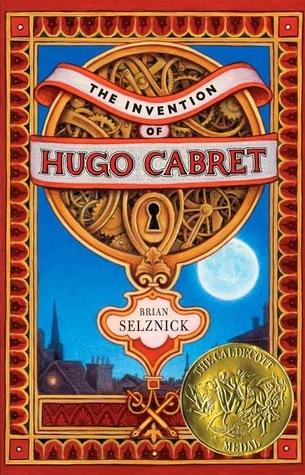
The Invention of Hugo Cabret by Brian Selznick

The Invention of Hugo Cabret is a children's/middle grade novel told in words and drawings. This was technically a re-read for me as I read this book many years ago.

This book is about 12-year-old Hugo Cabret, an orphan who lives in a train station in Paris in the 1930s. This is a historical fiction novel. It has a lot of historical elements sprinkled in (as it should), and gives a good introductory insight into the history of film and cinema.

This is a novel told in words and pictures. It's very unique and is the first children's novel/chapter book to receive the Caldecott Medal, an award given annually to the preceding year's "most distinguished American picture book for children." The Caldecott and Newbery medals are considered the most prestigious awards for American children's books. 

I love this book. I loved it as a child, and I love it now. It's a fantastic book that mixes two of my favorite things: reading and drawing. Plus, the cover is absolutely stunning for a children's book.

Much like the last one, I wrote an independent review for this book (linked here: Book Review: The Invention of Hugo Cabret by Brian Selznick (opens in new window)).


Six of Crows by Leigh Bardugo

Six of Crows is a YA fantasy novel with romance aspects sprinkled in, though it isn't the focal point of the novel. This series is technically the second series in the Grishaverse, the first being the Grisha/Shadow and Bone trilogy (depends on who in the fandom you ask; both are valid search queries, though if you read the Six of Crows cover at the top, it clearly states Grisha Trilogy).

This story is written in third-person point-of-view following six characters (five have a POV in this novel). These six characters are members of a gang in a world inspired by Amsterdam, Antwerp, Las Vegas, and Old New York (New Amsterdam), with one member being a leader. 

The leader of this gang (the Dregs) is Kaz Brekker, a 17-year-old boy. Kaz is very well known in Ketterdam, particularly in the place called 'the Barrel,' where he is known by 'Dirtyhands.' 

There are numerous other protagonists, such as Inej Ghafa (the Wraith), Jesper Fahey (the Sharpshooter), Nina Zenik (the Heartrender), and two others who are introduced a few chapters in. This book is very similar to the general idea of Ocean's Eleven, but as if it was a YA fantasy novel. 


War Girls 
by Tochi Onyebuchi

War Girls is a YA Speculative Fiction novel. It takes place in 2172, but is meant to tell a partial history of the Nigerian Civil War/Biafran War/Nigerian-Biafran War that began in 1967 and ended in 1970. 

I say partial because it is still fiction, and Tochi Onyebuchi took inspiration from other aspects of African history, as mentioned in the Author's Note.

War Girls is told from the perspectives of two characters. Two "adopted" sisters named Onyii and Ify. This story is told in third-person present tense, so the writing tense is definitely not for everyone. 

I checked this book out in 2020 to read during quarantine. Despite checking it out in March 2020, I actually read and finished this book in March 2021, due to my local library being closed.

I really enjoyed this book. It was different as well as intriguing. I also really enjoyed the writing style.


Sick Kids In Love by Hannah Moskowitz 

Sick Kids in Love is a YA contemporary romance that was released in 2019. The story is about Isabel Garfinkel and Sasha Sverdlov-Deckler, two Jewish teens who meet at the NYC hospital Isabel's father works at. 

Both of these characters have chronic illnesses and fall in love, hence the title. I was excited to read this. I read this one in December, so this read was pretty recent. I was excited for two reasons. 

I was excited to read a book with a romance between characters who have medical issues where both live. To clarify, this isn't a spoiler. The tagline at the top of the cover reads, "They don't die in this one." 

Isabel has rheumatoid arthritis and Sasha has Gaucher's disease. I really like this book, but there were a few things I didn't like about it. I will be posting a spoiler review for this book next month, so look out for that. That's where I will discuss the spoilers, but I'll explain the biggest problem I have with this book: Isabel's diagnosis. 

She's 16 (17 at the end of the book), and she explains that she was diagnosed with RA at the age of 9. This is impossible. Children cannot be diagnosed with straight up RA. Isabel has JIA, and the fact that she is described as having RA is medically inaccurate. I will explain this point further in my review.

This is one of only two books that I have not reviewed on my blog, but the review will be coming soon, so keep an eye out for that if you are interested. 

Worst

These books were the worst books I read in 2021, ordered from "best" to worst. Again, these "mini-reviews" are spoiler-free.


My Little Pony: Applejack and the Honest-to-Goodness Switcheroo by G.M. Berrow

I'm going to preface this by saying that this book was fine. I had no problem with this book, plot, writing, or characters. 

The problem I had was that the blurb on the back of the book gives a detail that doesn't happen until the last couple chapters of the book.

That was my main complaint. Other than that, this book is fun and enjoyable. I just didn't like that the title and blurb give away something that happens toward the end. 

What this book really is about is Applejack trying to win an award for Sweet Apple Acres, her family's farm, not whatever the blurb advertises.

Everything, Everything by Nicola Yoon

Everything, Everything is a YA contemporary romance novel. I read this book in November. This review is spoiler free, but let me just say this: I hated the ending of this book. 

This was a 2.5 star read for me. I wrote a spoiler filled rant review for this book (linked here: Rant Review: Everything, Everything by Nicola Yoon (opens in new window)).

This story is about Madeline Whittier, an 18-year-old biracial (half-African American, half-Japanese) girl who lives inside a sterilized home because she has a rare disease called Severe Combined Immunodeficiency, or SCID for short. 

It is also known as 'bubble boy disease' after the media used it to refer to David Vetter, a young boy who was diagnosed with the condition in the 1970s.

Maddy has lived a pretty happy life. She spends a lot of time with her mother and her nurse, Carla. Then, Maddy's life changes drastically once Olly, a new boy next door moves in. They begin to talk through emails and get to know each other. 

This book is a romance story about a girl falling in love with the boy next door. 

If you are interested in this plot and think it'll be a great book with disability rep, I'd highly recommend reading my review, despite the numerous spoilers included. 

If you're interested in this for the romance aspect then I'd recommend it, but if you're interested because you want to read about this illness/disability that Maddie has, then you'll likely be disappointed, as the ending is an offensive letdown.

The romance was cute, but this book was hands down the worst book I read in 2021. The amount of times the second half frustrated me was uncanny as I don't get that frustrated that often. 

To a certain extent, I'd say that I hated the second half of this book more than I hate Twilight, which is saying a lot, as Twilight was my book to rank on in 2020.

So there you go! 


Those are best and worst books I read in 2021. I intend to do another for 2022, as long as I have at least two books I disliked.


See you Thursday,


Lexi KšŸ–Œ