Showing posts with label Juvenile Arthritis. Show all posts

Tuesday, December 10, 2024

Musings of an Arthritic Artist: Life Update #1

Welcome back to Musings of an Arthritic Artist! Today's post is going to be a bit different than my usual posts and my posts as of late. 


Today I'm going to be doing a life update post. Basically, I'm going to be talking about what's been going on in my life.


Without further ado, let's get into the post!


So, it's been a while. I haven't written or posted a single blog post since April. And before then, I hadn't posted since April 2023. A lot has happened since then, so I'm going to get into that. Since I'm doing an update that covers summer 2023 to now, this will be a pretty long blog post, but please, bear with me.

--------------------------------------------------------------

In July of 2023, on a personal family business trip, I began to have more noticeable balance issues. I've had balance issues on and off since I was a child, but it became more prominent. It became so disruptive that I began to require my sister's arm as a mobility aid. I told myself that I would wait it out, see what happened. See if it improved. If not, then I'd take further measures.

After about a month, it hadn't really improved. Right before mine and my family's showing of Blue Beetle (we ended up seeing it opening day, so August 18, 2023), I asked my mom if she and my dad could buy me a cane. I had already been looking at some on Amazon, and I had determined that I had wanted a foldable one.

I had actually been wondering if I would benefit from a cane long before this conversation ever happened. But when I'd first been wondering about it, I didn't feel as if my issues were severe enough to warrant one. But I had first began thinking about a cane in 2022 sometime. I didn't feel as if it was an immediate, pressing issue though, so I put that thought on the back burner.

Until August 2023 when I realized that enough was enough. We ordered a cane and two cane handle walking sticks the very next day. Both arrived on August 28th, and I began using them immediately. I began to see improvement with my ability to walk. 

The design I liked came two different ways, depending on how you ordered them. One has the single top most canes are seen having. The other type had a rubber quad base. Due to the nature of my balance issues and the ability for them to stand by themselves, I decided to go with the rubber quad base cane.

I no longer needed to rely on my sister to help me walk. I could walk independently, not having to worry if there was someone standing beside me for me to grab the arm of in case I started falling over.

On September 1st, my mom decided to order me the other two cane designs of the exact cane I'd gotten, so I'd have 'options'.

Gladiola and Vincent, my two cane handle walking sticks

From left to right: Flora, Kalil, and Izara, my foldable quad canes

--------------------------------------------------------------

Last December, my family and I went to San Diego, specifically to SeaWorld San Diego. San Diego has a lot of hills, and I was struggling to walk, even with the cane handle walking sticks that I was using. I remember sitting down and talking to my sister and talking about how a wheelchair would be very good at a park like that, and even the rest of San Diego due to the inclines. She agreed with me, and we were both looking at wheelchairs on Amazon, because she was wondering how much they cost. 

Months later, I brought up the topic to my mother. We began talking about it. I mentioned how it would benefit me, and we both agreed that we would look into it. 

During the first week of April, I went to see my primary doctor, and I asked for a wheelchair prescription. Turned it in to a local medical supply place and ended up picking up my wheelchair pretty much the day right before my family and I left on our June trip to Las Vegas and San Diego.

My prescription wheelchair

--------------------------------------------------------------

Another update is that I no longer have just one diagnosis. And many months ago, I figured out that I never had only one diagnosis. While going through my medical records earlier this year, I uncovered that around the time I was diagnosed with JIA, I was also diagnosed with infantile scoliosis. Specifically mild thoracolumbar levoscoliosis. This scoliosis was also found on an imaging test that was taken when I was seven, but I was never aware of this, nor were my parents. But I have a mild curvature in the thoracolumbar section of my spine that curves towards the left (levoscoliosis).

Earlier this year, I had been experiencing a lot of back pain. Pretty much on the daily. Every day from April 4th to at least May 30, I had back pain every single day. I also had knee pain daily during this time. 

I saw the nurse practitioner for an adult rheumatologist in April. The appointment went okay, but I wasn't really pleased. I was prescribed methylprednisolone, despite having low inflammatory markers, and I didn't end up taking those steroids. I ended up seeing a second rheumatologist.

In May, while seeing an adult rheumatologist who was supposed to be treating my JIA, I was diagnosed with fibromyalgia. 

I ended up seeing the first adult rheumatologist again in June, the day after I got back from being out of town. After that, I am not seeing him again. I wasn't satisfied with the care I received there. 

As for the second rheumatologist, the first appointment went relatively well, despite the rheumatologist pretty much telling me that my JIA diagnosis was a bogus diagnosis and seemingly doubting the doctor I received that diagnosis from. And then during that appointment, I was also diagnosed with hip bursitis and given two steroid shots, one in each hip. The doctor told me he wanted to see my medical records, because I was in the middle of trying to receive them from my pediatric hospital where I was being seen before. 

The next appointment though, I was discharged from his office and told that my primary doctor could treat my fibromyalgia, completely ignoring the arthritis I have because he found 'no evidence of RA, AS, or any connective tissue disease' despite my JIA being a connective tissue disease.

I haven't seen him since because he dismissed me and told me to only go back if my symptoms really got worse. But if I see an adult rheumatologist again (and I will have to because my main issues are rheumatology related), I will not be seeing him or the previous rheumatologist that I saw.

He did, however, bring up a new issue that I had to address: a fast heart rate.

--------------------------------------------------------------

In May, I had been prescribed four different things. Voltaren gel, for my knees, Celebrex, for my arthritis and fibromyalgia, Vitamin D2, and Duloxetine (Cymbalta), for my fibromyalgia.

I didn't take these, except for the Vitamin D2, at the time. That was because I didn't want to risk having an allergic reaction to any of these medications out of town, and it was also because I intended to have my very first alcoholic beverage in Las Vegas, due to turning 21 this year.

I began taking the Celebrex and Cymbalta about a week before my 2nd rheumatology appointment in July with the doctor who prescribed those. I stopped taking the Celebrex after 2 days because it caused me to get more heart palpitations than I usually get. 

The Cymbalta was working for my back pain. Finally, I was getting up and not feeling back pain every second of every day. It was nice. I started with a 60mg dose, or 30mg, twice daily. Which, when looking at recommended starting dosages for fibromyalgia, seems a bit high, considering the starter dose is usually 30mg, and then increased to 60mg if the patient's fibro responds to it well.

I started to get side effects from the Cymbalta. I had the usual, expected drowsiness side effect for the first 2 weeks. And then, I noticed gum changes. My dosage of Cymbalta was causing my gums to recede. But because I had already been on it for a while, I couldn't just quit the medication, especially not after such a high dose. If I quit it cold turkey, I would risk major withdrawal symptoms due to it being an antidepressant.

After a while, I lowered my dose to 30mg, once a day, by simply taking one less tablet a day. I saw my pediatrician for this issue and my dose was subsequently lowered to a 20mg dose, once daily, which was the lowest dose I could possibly take. 

After months of weaning off it, I finally stopped taking Cymbalta on November 3rd.

While I was taking the Cymbalta, I was told I had a fast heart rate by my rheumatologist and my pediatrician. I ended up getting a pulse oximeter to keep a track of my heart rate.

During this heart rate issue, my family and I had been wondering if it was being caused by the Cymbalta. I found out that it actually wasn't because my resting heart rate was 99 beats per minute for my first rheumatology appointment in April. My heart rate was 98 beats per minute when I was told by my second rheumatologist in July. My heart rate was 2 off from being considered tachycardia in April.

My heart rate was not getting any lower with the Cymbalta, but it wasn't causing the issue.

In September I saw a cardiologist for a fast heart rate. When my father asked if my symptoms could be due to POTS (Postural Orthostatic Tachycardia Syndrome, which my family and I had been looking at previously), I was told it couldn't possibly be that because my blood pressure didn't change from lying down to sitting up. Which is inaccurate because the POTS diagnostic criteria has nothing to do with blood pressure, but I didn't push the issue. 

I was told that I'd have to have an echocardiogram to rule out heart disease, which was scheduled for about 3 weeks in the future. I was then told I'd have to have a follow up appointment to go over the echo results.

That appointment was originally scheduled for January because there were no sooner openings, but I was assured that there were always cancellations, so it'd be sooner than that. Sure enough, someone cancelled so my follow up was the day right after my echo.

That next day I walked out with a diagnosis of inappropriate sinus tachycardia. IST is a type of dysautonomia. Dysautonomia is the dysfunction of the autonomic nervous system, which controls involuntary body responses, like heart rate, blood pressure, respiration, digestion, body temperature, metabolism, etc. My echocardiogram had come back normal. I had no enlargements or other abnormalities.

--------------------------------------------------------------

During this year, I have also seen a neurologist twice, after I was referred due to having hand tremors. I had a genetic blood test in August, but I don't have the results of that, so for now, I'm not really discussing the neurologist. Nothing has been found, aside from the fact that my balance issues have been clinically confirmed. And I had multiple tests done to try to find the cause of the tremors and balance issues, to no avail so far.

--------------------------------------------------------------

I have been too busy with medical appointments and tests this year to really be able to post as much as I'd like, especially because I haven't really read many books (perhaps only 6-8 that I would consider reviewing here), nor have I really watched many movies.

I had at least 12 or so doctor's appointments this year. Had to do 3 MRIs, 3 EKGs, 3 X-Rays, an EEG, an EMG/NCV, an echocardiogram, 2 genetic blood tests, and 4 standard blood tests. All starting in March and ending in September. That's about 5 appointments and/or tests per month. So I've been slammed this year.

--------------------------------------------------------------

I've been meaning to be more active on my blog, and I hope to be more active this month and next year. I have a lot of reviews I can post here. For books, TV shows, and movies, and I'm really excited to post them. I'm also currently reading some books that I can review here. Overall, I'm really looking forward to continuing my blog because I have been active for too long.

That's it for this post! I hope you enjoyed it! 


See you Thursday, 


Lexi KšŸ–Œ

Tuesday, August 9, 2022

How to Write a Disabled Character/Character with a Disability

Welcome back to Musings of an Arthritic Artist! Today I'm going to be going over my tips to writing a disabled character/character with a disability. 


I have read and seen a lot of disabled characters in media. Some are good, some are bad. These are tips for writing disabled characters from an actual disabled person.


Without further ado, let's get into the post! 

These tips can apply to pretty much any disability, however I will mostly be explaining using terminology and medical conditions I am intimately familiar with. 

1. Don't Gloss Over Their Disability

If you want to write a disabled character, make sure that their disability isn't glossed over, especially if they are a super important character to the plot. If they are a main character or a main side character or a family member of a main character, don't just gloss over it. 

This doesn't mean that you should focus on it, on the contrary, don't do that either. It should generally be clear what the character's disability is and how it affects them, however it shouldn't take up the majority of your story if that isn't what it's about. 


2. Don't 'Cure' Their Disability

There are numerous types of media out there that cure characters who have disabilities. This is considered a big mistake in the disabled community. It may seem completely innocent. 

However, this is generally a bad thing. Especially don't have the character be cured and then have them talk about how they are 'whole' now. This is offensive and dehumanizing. 

A disabled person is a person. They are a whole person despite their disability. Most disabled people don't wish to be cured. And the vast majority of disabilities aren't cured.

For this one, let's use cancer as an example. While doctors will say that someone's cancer has been 'cured,' there technically is no cure for cancer. Cancers are treatable with medications and other measures, and remission can even be reached, which is a period where either cancer cells are not detectable or where very few are detectable. 

However, cancer can only ever reach remission. Even if someone is 'cured' of their cancer, there's still a chance it could 'come back,' even after the initial 5 years where doctors say it's more likely to come back. 

But there is no cure for cancer. Disabilities are not ever completely cured. 

Now, this is a somewhat split topic. The majority of the disabled community hates media where a disabled character is cured, however this varies sometimes depending on how new someone's disability is. Meaning, people with newly acquired disabilities sometimes wish that they could be cured, whilst people who have lived with a disability for most, if not all, of their lives, they would actually dread being cured. 

You'll never 100% please every member of a group, but there are things you can do to make it less harmful. A lot of newly disabled people, and sometimes even people who have been disabled for a while, struggle with internalized ableism. This means that they have some issues coming to terms with accepting their disability. They may believe what society says about disabled people.

They may believe that their disability makes them inferior to others. So before you decide which route you want to take with your character, decide this: how new is your character's disability? If they have lived with their disability their whole life, don't have them think about a cure. 

If your character's disability is new, they may think about a cure, and might even wish for one (this still doesn't excuse curing a character of their disability). Someone who has lived with their disability for a long time will find ways to do the things they can't do. They'll find ways to live their lives. If you have a character who was born without a right hand, don't have them struggle to do certain day-to-day tasks when they are a teenager. 

If your character has lived with their disability for most of their life, and you want to explain how they do certain things, this will require some out of the box thinking. Most disabled people are pretty creative.


3. Don't Rely on Disability Stereotypes

What I mean by this is, don't rely on stereotypes for your disabled character(s). These are what I call 'stock' disabled characters. These are characters that have a certain disability, but are just as stereotypical as any other character with the same disability.

This includes things like the autistic character that loves trains, the disabled evil villain who is evil because they're disabled, the disabled character with powers that they have because of their disability, the character who is pitied or viewed as helpless because of their disability, and the disabled character who is the butt of the joke, to name a few.

Now, there's no problem having a villain who is disabled. However, it's always best to have a character with a disability who is also good.


4. Don't Use Disability as a Plot Device

So, I think I need to clarify something with this. This doesn't mean that disability can't be part of your plot. It absolutely can. However, when using disability as a predominant plot, tread carefully and lightly.

Make sure that your character's disability isn't their entire personality. It can affect the decisions they make and aspects of their personality, but don't have their disability be their sole trait.

Disability is a part of my identity, and it has shaped aspects of my personality. But I have other interests and other personality traits besides my disability.


5. Research

Research is key to creating realistic and accurate representation of people with disabilities. Research the disability your character is going to have. Watch YouTube videos about that disability. Find blogs written by people with that disability.

You may think it's hard to find people who have disabilities, but they're actually really easy to find if you look in the right places.


Tuesday, February 8, 2022

Book Review: Angie and Me by Rebecca C. Jones

Welcome back to Musings of an Arthritic Artist! Today I am going to be doing another book review, this one a review of Angie and Me by Rebecca C. Jones.


This review will predominantly be spoiler-free, however, there will be a spoiler section toward the end of this post.


With that aside, let's get into the review!


This book is a middle grade novel. It follows 12 year old Jenna, who ends up staying at a children’s hospital while being treated for juvenile rheumatoid arthritis. While there she meets another girl, Angie, who has a rare blood disorder (it’s never specified what it’s called). 

I read this because the main girl has juvenile rheumatoid arthritis. I wanted to see if I related to it. 

As far as relatability, there wasn’t a lot. Only partially. At least in my case. I related to the pain Jenna felt, but everything else, not really.

Jenna is told to use a walker. I’ve never used a walker. She was given a wheelchair to use. I’ve only used a wheelchair once, and I hated the looks of other people, so I refused one, instead using other mobility options. I’ve also never had splints like the ones Jenna had. I do have braces, but I’ve never had to stay at a hospital for treatment.

Truthfully, while this book’s protagonist is Jenna, this book truthfully seems to be about Angie, the girl Jenna meets at the hospital. 

šŸ’„šŸ”„SPOILER ALERTšŸ”„šŸ’„
Anything below this is a spoiler
You have been warned
___________________________________________________
___________________________________________________

I hated the ending. It was bad and tragic, and I didn't like it. I know that in real life, many children with medical conditions die. I know that. I just didn't like how it happened randomly. There was buildup, but at the same time, there wasn't. 

___________________________________________________
___________________________________________________
✔šŸ‘SPOILERS OVERšŸ‘✔


Overall, I enjoyed this book. It wasn’t perfect. I hated the ending, and I know that I would’ve hated it even more if I had read this book as a child.

That's it for this review! I hope you enjoyed it! 


See you Thursday, 


Lexi KšŸ–Œ

Tuesday, February 1, 2022

Book Review: Sick Kids In Love by Hannah Moskowitz

Welcome back to Musings of an Arthritic Artist! Today I am going to be doing another book review, this one for Sick Kids In Love by Hannah Moskowitz. 


This is a book I read pretty recently, so let's discuss it. There will be spoilers for this book. If you haven't read it and wish to, I'd recommend not reading this review. 


February (in the United States) is Jewish Disability Awareness and Inclusion Month, while February 2 is Rheumatoid Arthritis Awareness Day, so I thought that this was the perfect time to post this review.


With that aside, let's get into it!

Sick Kids in Love is a YA sick lit novel about Isabel, a 16 year old girl with RA who meets Sasha, a 16 year old boy with Gaucher's disease in a hospital, where she is at for RA infusion treatments. This story isn't a standard sick lit novel. It isn't like Midnight Sun, Five Feet Apart, or The Fault in Our Stars. It's a sick lit novel wherein nobody dies. 

This isn't a spoiler, especially if you pay attention to the cover. The tagline reads "They don't die in this one," obviously taking a small jab at other sick lit novels wherein death is always imminent. This book also isn't like Everything, Everything which I already reviewed and expressed my animosity for. Both Sasha and Isabel stay sick throughout the whole novel, but neither of them dies.

One thing I noticed right off the bat in chapter 1 is that Isabel tells Sasha that she is taking DMARD infusions for rheumatoid arthritis that she was diagnosed with at the age of nine. This is a fallacy. Children cannot get RA. RA is an adult disease, meaning 18 and older. Children can get JIA, juvenile idiopathic arthritis. 

Fun fact: JIA used to be called JRA (juvenile rheumatoid arthritis), but the terminology was changed because too many people thought that JRA/JIA was just a child version of RA. Nope. False. While RF-factor positive polyarticular JIA is closely linked to RA, the two are distinctly different, despite being treated in similar ways. 

Someone with JIA/JRA wouldn't tell a doctor that they have RA when asked about their medical history, because symptoms are different. Instead, it would be referred to as juvenile idiopathic arthritis or juvenile-onset arthritis, not rheumatoid arthritis because they're two distinct diseases. 

Yes, once people with JIA become adults, their type of arthritis--depending on the symptoms or severity--will sometimes be 're-diagnosed,' but Isabel wouldn't have been diagnosed with RA at 9. She would've been diagnosed with JIA/JRA, THEN once she becomes an adult MAY be diagnosed with RA. 

There is no way that Isabel actually has RA. She's 16 years, 9 months old, as she tells Sasha in chapter 1. At the end of the book, she's 17. The youngest age where someone can be diagnosed with RA is 18. Children used to be diagnosed with RA a long time ago, however, once the medical community found that JIA/JRA and RA are two separate diagnoses and conditions (despite being related), children started being diagnosed with JIA/JRA. Therefore, because this book is a contemporary romance, and it came out a few years ago and takes place in the modern day, Isabel, wouldn't have been diagnosed as having RA by doctors.

How was she diagnosed with RA? I'd love to know. Because, in all actuality, Isabel has juvenile idiopathic arthritis. No way does she have rheumatoid arthritis. That's not me being ignorant. That's me doing my research/living with the same disease.

The reason Isabel cannot have RA is because arthritis in children tends to affect growth and development. RA is the development of arthritis in adults that does not lead to joint deformities when it comes to growth. Juvenile arthritis on the other hand is a distinctive condition because arthritis in children can affect growth and joint development because their bodies are still developing.

There are links at the end of this post for anyone who wants any further information on this. It's also included so nobody can call me out for being 'ignorant' and spreading 'misinformation.' I like to cover my bases šŸ˜‡


In chapter 4, Isabel mentions the walk home. She mentions getting a taxi, but that her dad will wonder why she used a taxi to go fifteen blocks? I didn't understand this. Her father is a doctor, and Isabel has supposedly had arthritis since she was at least nine. Fifteen blocks is 0.75 miles, which is pretty far. 

Honestly, just use the taxi. I know I would, and my parents would understand. What's so wrong with using a taxi? Who cares if most people would just walk? You aren't 'most' people. To most people, you aren't even normal. So just take the taxi, or walk, and just stop talking about it.


Character-wise, Sasha was hilarious.


The romance was super sweet. I loved all the illness humor.


There were many scenes that I liked, but one of my favorites was when Sasha and Isabel were on the subway the day they went to LIC Landing. One of my favorite scenes was when Isabel was having a hard time standing due to joint pain, and Sasha asked a man who was sitting down if Isabel could sit down in his spot. I loved that part. 


That's it for this review! I hope you enjoyed it! 


See you Thursday, 


Lexi KšŸ–Œ

Further information: 

Do Adults Have Juvenile Arthritis? (opens in new window)

Thursday, January 13, 2022

Is Disability an 'Adult Issue?'

Welcome back to Musings of an Arthritic Artist! Today I am going to be answering the question, 'is disability an adult issue?'


Let's get into my thoughts!


King, Alexandria. Musings of an Arthritic Artist. 2021.

I can't remember where I saw this, but I was on Goodreads one day and I had come across a book that had a disabled character. I can't remember the book now and likely couldn't find it if I tried. There was a review by someone that mentioned that the book dove into a couple 'adult topics,' one of which was disability, and it caused me to pause. 

Do people think of disability as an adult issue? It seems so. Most people believe children are carefree individuals who have no worries in the world. At least three million children in the United States live with a disability. That's about 4.3% of the under-18 population. 

The harm with thinking that disability is an adult issue is that it ignores the struggles that many children face every day. Struggles that I faced and struggles that I didn't face for whatever reason. I'm going to tell a story. A story from my childhood. A story I only remember because my mom has told it a few times.

We had been traveling one day to a medical appointment out of town, and we ended up coming across this older man. He seemed to be in a sad mood. My parents started talking to him. Being a child, I didn't follow the conversation that well, so the majority of what I know is from my mother's recollections.

He saw me and told my parents how it must have been so nice to be a child because children have no care in the world; no worries; no stresses. My parents then told him that we were heading to a medical appointment for me because I had certain issues. After that, the man's mood changed. He seemed.....more hopeful.

Children aren't always carefree. Children still have struggles. They could be as large as disability or as small as a math problem on a test. Children have struggles. If children were always carefree, they wouldn't cry. They wouldn't get upset. They'd just be happy all the time. 

I didn't have a carefree childhood. However, just because I didn't have a carefree childhood, doesn't mean that my childhood was bad. On the contrary, I loved my childhood and wouldn't change much about it. It taught me many important lessons. 

When we treat disability like it's an 'adult issue', we ignore the fact that children have disabilities as well. This can lead to a mentality of 'you're too young for [insert medical condition here]'. 

Disability knows no age. Disability doesn't discriminate. It doesn't matter your age, your race, your sex, your gender, or your personality. It can affect everyone the same, and children are no different.

That's it for this post! I hope you enjoyed it! 


Until next time, 


Lexi KšŸ–Œ

Tuesday, January 11, 2022

Is 'Disabled' a Bad Word? A Disabled Person's Thoughts

Welcome back to Musings of an Arthritic Artist! Today I am going to be voicing my opinion on 'is disabled a bad word?'. I'm not going to spend too much time on this introduction as there is no point. 


Let's get into my thoughts!


King, Alexandria. Musings of an Arthritic Artist. 2021.


Many people believe that 'disabled' is a dirty, negative word. It isn't. But the question is, why do people think that? The thought that 'disabled' and 'disability' are 'bad' words doesn't make sense to me. I've been randomly thinking about this, and I may have come to a conclusion on why it's seen as a bad word. 

First, let's breakdown and examine the word 'disabled.' 'Dis' is a prefix meaning 'not.' So, when 'disabled' is broken down, it translates to 'not able.' I mentioned this in my post where I discussed the different terms non-disabled people will use to refer to disabled people.

Like I said there, the words 'not able' are vague. They don't give any clue as to why someone is disabled. It's an inclusive term. What does that mean, not able? Not able to do what exactly? Not able to hear? That's a deaf person. Not able to see? That's a blind person. Not able to walk? That's a wheelchair user of some kind, ambulatory or otherwise. 

So why do people think disabled is a bad word? Here's my theory.

It isn't until you see the antonym of disabled that it becomes problematic. What is the antonym? Able-bodied. With this connotation, it can be understood why many people believe disabled to be a bad word. This word implies that disabled people don't have 'able-bodies.' That they don't have capable bodies--that their bodies are inherently flawed and, perhaps, even unusable. This just isn't true. 

Disability and being disabled is just a reality for some people. There are some things we can do, but there are other things we can't. That's not me being pessimistic. That's just fact. I can't open cans with pull tabs. That's not me being negative or me 'not trying hard enough.' That's just my reality.

So, do I believe that 'disabled' is a bad word? No. Not at all. It's a reality I have lived for the past twelve years, and it's a word that best describes some aspects of my life. Substitute words like 'differently-abled' and 'handicapable' don't describe my life, solely because they don't describe how difficult my life has been or how many struggles I've gone though, despite me having a happy life.

Those words are patronizing. They were created by non-disabled people to describe disabled people. They were created to replace the 'offensive' disabled. Stating that disabled is a bad and negative word is offensive to me. It conveys that there's something wrong with being disabled--that there is something wrong with my life. There isn't. I love my life, disabled aspects and all.

Disabled is not a dirty word, and the sooner people realize that, the better off we'll be.

That's it for this post! I hope you enjoyed it! 


See you Thursday, 


Lexi KšŸ–Œ

Tuesday, January 4, 2022

Best and Worst Books I Read in 2021 (Spoiler Free)

Welcome back to Musings of an Arthritic Artist! 


Today I'm going to be talking about the best and worst books I read in 2021. I have independent reviews for the majority of these books, which I will link to in case anyone is interested in my more in-depth thoughts.


Without further ado, let's get into the post, beginning with the best books I read. 


Best

These books aren't in any particular order, as I find it difficult to rank books I enjoy. All I include here are synopses and my spoiler-free thoughts.


Eliza and Her Monsters by Francesca Zappia 

Eliza and Her Monsters is a YA contemporary romance novel. This story follows Eliza Mirk, an eighteen-year-old girl. She's the anonymous webcomic creator of Monstrous Sea. In real life, Eliza is shy, friendless, and has anxiety, but online she is LadyConstellation and has millions of followers and fans. 

Her world is changed when a boy named Wallace Warland transfers to her school. Wallace writes fanfiction for Monstrous Sea. The two become friends, but Eliza doesn't tell him that she is LadyConstellation, the creator of the exact web comic he is a fan of. 

I really liked this book. It was cute. I also liked the artistic elements that were weaved into the story. They were seamless and made the story more enjoyable. The characters were fantastic and I instantly fell in love with them.

I wrote a review for this a few months ago, if you want to read my complete, spoiler filled thoughts on this book (linked here: Book Review: Eliza and Her Monsters by Francesca Zappia (opens in new window)).


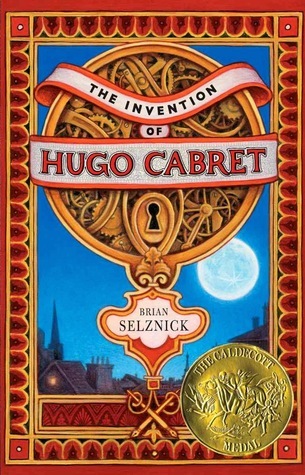
The Invention of Hugo Cabret by Brian Selznick

The Invention of Hugo Cabret is a children's/middle grade novel told in words and drawings. This was technically a re-read for me as I read this book many years ago.

This book is about 12-year-old Hugo Cabret, an orphan who lives in a train station in Paris in the 1930s. This is a historical fiction novel. It has a lot of historical elements sprinkled in (as it should), and gives a good introductory insight into the history of film and cinema.

This is a novel told in words and pictures. It's very unique and is the first children's novel/chapter book to receive the Caldecott Medal, an award given annually to the preceding year's "most distinguished American picture book for children." The Caldecott and Newbery medals are considered the most prestigious awards for American children's books. 

I love this book. I loved it as a child, and I love it now. It's a fantastic book that mixes two of my favorite things: reading and drawing. Plus, the cover is absolutely stunning for a children's book.

Much like the last one, I wrote an independent review for this book (linked here: Book Review: The Invention of Hugo Cabret by Brian Selznick (opens in new window)).


Six of Crows by Leigh Bardugo

Six of Crows is a YA fantasy novel with romance aspects sprinkled in, though it isn't the focal point of the novel. This series is technically the second series in the Grishaverse, the first being the Grisha/Shadow and Bone trilogy (depends on who in the fandom you ask; both are valid search queries, though if you read the Six of Crows cover at the top, it clearly states Grisha Trilogy).

This story is written in third-person point-of-view following six characters (five have a POV in this novel). These six characters are members of a gang in a world inspired by Amsterdam, Antwerp, Las Vegas, and Old New York (New Amsterdam), with one member being a leader. 

The leader of this gang (the Dregs) is Kaz Brekker, a 17-year-old boy. Kaz is very well known in Ketterdam, particularly in the place called 'the Barrel,' where he is known by 'Dirtyhands.' 

There are numerous other protagonists, such as Inej Ghafa (the Wraith), Jesper Fahey (the Sharpshooter), Nina Zenik (the Heartrender), and two others who are introduced a few chapters in. This book is very similar to the general idea of Ocean's Eleven, but as if it was a YA fantasy novel. 


War Girls 
by Tochi Onyebuchi

War Girls is a YA Speculative Fiction novel. It takes place in 2172, but is meant to tell a partial history of the Nigerian Civil War/Biafran War/Nigerian-Biafran War that began in 1967 and ended in 1970. 

I say partial because it is still fiction, and Tochi Onyebuchi took inspiration from other aspects of African history, as mentioned in the Author's Note.

War Girls is told from the perspectives of two characters. Two "adopted" sisters named Onyii and Ify. This story is told in third-person present tense, so the writing tense is definitely not for everyone. 

I checked this book out in 2020 to read during quarantine. Despite checking it out in March 2020, I actually read and finished this book in March 2021, due to my local library being closed.

I really enjoyed this book. It was different as well as intriguing. I also really enjoyed the writing style.


Sick Kids In Love by Hannah Moskowitz 

Sick Kids in Love is a YA contemporary romance that was released in 2019. The story is about Isabel Garfinkel and Sasha Sverdlov-Deckler, two Jewish teens who meet at the NYC hospital Isabel's father works at. 

Both of these characters have chronic illnesses and fall in love, hence the title. I was excited to read this. I read this one in December, so this read was pretty recent. I was excited for two reasons. 

I was excited to read a book with a romance between characters who have medical issues where both live. To clarify, this isn't a spoiler. The tagline at the top of the cover reads, "They don't die in this one." 

Isabel has rheumatoid arthritis and Sasha has Gaucher's disease. I really like this book, but there were a few things I didn't like about it. I will be posting a spoiler review for this book next month, so look out for that. That's where I will discuss the spoilers, but I'll explain the biggest problem I have with this book: Isabel's diagnosis. 

She's 16 (17 at the end of the book), and she explains that she was diagnosed with RA at the age of 9. This is impossible. Children cannot be diagnosed with straight up RA. Isabel has JIA, and the fact that she is described as having RA is medically inaccurate. I will explain this point further in my review.

This is one of only two books that I have not reviewed on my blog, but the review will be coming soon, so keep an eye out for that if you are interested. 

Worst

These books were the worst books I read in 2021, ordered from "best" to worst. Again, these "mini-reviews" are spoiler-free.


My Little Pony: Applejack and the Honest-to-Goodness Switcheroo by G.M. Berrow

I'm going to preface this by saying that this book was fine. I had no problem with this book, plot, writing, or characters. 

The problem I had was that the blurb on the back of the book gives a detail that doesn't happen until the last couple chapters of the book.

That was my main complaint. Other than that, this book is fun and enjoyable. I just didn't like that the title and blurb give away something that happens toward the end. 

What this book really is about is Applejack trying to win an award for Sweet Apple Acres, her family's farm, not whatever the blurb advertises.

Everything, Everything by Nicola Yoon

Everything, Everything is a YA contemporary romance novel. I read this book in November. This review is spoiler free, but let me just say this: I hated the ending of this book. 

This was a 2.5 star read for me. I wrote a spoiler filled rant review for this book (linked here: Rant Review: Everything, Everything by Nicola Yoon (opens in new window)).

This story is about Madeline Whittier, an 18-year-old biracial (half-African American, half-Japanese) girl who lives inside a sterilized home because she has a rare disease called Severe Combined Immunodeficiency, or SCID for short. 

It is also known as 'bubble boy disease' after the media used it to refer to David Vetter, a young boy who was diagnosed with the condition in the 1970s.

Maddy has lived a pretty happy life. She spends a lot of time with her mother and her nurse, Carla. Then, Maddy's life changes drastically once Olly, a new boy next door moves in. They begin to talk through emails and get to know each other. 

This book is a romance story about a girl falling in love with the boy next door. 

If you are interested in this plot and think it'll be a great book with disability rep, I'd highly recommend reading my review, despite the numerous spoilers included. 

If you're interested in this for the romance aspect then I'd recommend it, but if you're interested because you want to read about this illness/disability that Maddie has, then you'll likely be disappointed, as the ending is an offensive letdown.

The romance was cute, but this book was hands down the worst book I read in 2021. The amount of times the second half frustrated me was uncanny as I don't get that frustrated that often. 

To a certain extent, I'd say that I hated the second half of this book more than I hate Twilight, which is saying a lot, as Twilight was my book to rank on in 2020.

So there you go! 


Those are best and worst books I read in 2021. I intend to do another for 2022, as long as I have at least two books I disliked.


See you Thursday,


Lexi KšŸ–Œ

Tuesday, December 21, 2021

Book Characters I Relate To Most

Welcome back to Musings of an Arthritic Artist!


Today I'm going to be listing the book characters I relate to and explain why I relate to them. None of these characters are in any particular order. This is just the order I thought of them in.


Let's get into the post!

King, Alexandria. Musings of an Arthritic Artist. 2021.

Jem Carstairs

First up is Jem Carstairs from The Infernal Devices series by Cassandra Clare. I just relate to Jem's personality. Another factor is his illness. Due to being poisoned by a demon as a child by yin fen (a demon poison which can be turned into an addictive drug), Jem is forced to routinely take the drug to live due to his body becoming dependent of it. 

However, this is a double-edged sword that is pretty much lose-lose, due to the fact that he can't live without the yin fen, but the yin fen is killing him, so he has an overall short lifeline. I'm not terminally ill, so the fact that the yin fen is slowly killing Jem isn't the aspect of him--or his illness--that I relate to. It's in some of the things he says and just the way his personality is.  


Kaz Brekker

Next is Kaz Brekker from the Six of Crows duology by Leigh Bardugo. I've only read the first book in this series, but I doubt the relatability will end there for me. Kaz is overall a generally hard person to relate to for me, particularly because of his personality and how cold and calculating he is. He's also a gang leader and a criminal, which is most definitely not something I relate to. 

However, there is the small matter of his leg and the fact that he walks with a cane. I have never personally had to use a cane to get around, but I related strongly to Kaz's leg issues as well as some of the pain he mentioned. Due to my autoimmune disease, I tend to limp when my body is in the middle of a flare. Because of this, I relate strongly to Kaz and believe he's one of the best representations of disability I've come across in books. 


Hermione Granger

Hermione from the Harry Potter series by J.K. Rowling was one of the first characters I related to. This one is due to personality. Hermione loves to learn. I love to learn as well. Hermione is just one of those characters I aspired to be. My work ethic isn't the best, so when I read this series, I used her as a role model to get a better work ethic. I would study random subjects. I would try to study smarter, not harder. Overall, I tried to be the student (and person) Hermione was. 

There are many facets of Hermione's personality that I relate to. She relies a lot on logic, and I know that I do as well. I don't always need proof of things, but when it comes to certain subjects I do need proof. She and I can both be pretty perfectionistic as well.

Hermione can also be blunt, sometimes to the point of tactlessness, and this is something I strongly relate to. When it comes to me, my family knows that if you want the truth, I'll give the truth. I don't mince words if it isn't necessary. If one of my parents asks me how their meal that they cooked is, I will answer honestly regardless of if the answer is good or bad. I don't give answers just to make someone feel good, especially if they're asking for my opinion. Like Hermione, I also don't like lying.


Annabeth Chase

Next is Annabeth Chase from the Camp Half-Blood Chronicles. I related to Annabeth in a similar way to Hermione. Annabeth is very logic based, like I am. She is also wise, which I was called a couple times as a child. Annabeth can also be very stubborn. She loves knowledge and learning new things. She tends to talk very philosophically. I love having philosophical conversations. I find them very enjoyable and educational. They're just overall fun discussions to have.


Isabel Garfinkel

Isabel is a new addition to my relatability list. She is the protagonist in a book I recently read called Sick Kids in Love by Hannah Moskowitz. I have a review for this book coming in February. Isabel has rheumatoid arthritis (I'll go into more detail with this in my review), however (even though it's not stated in the book) she really has juvenile idiopathic arthritis. If I had to guess, I'd say that she has RF (rheumatoid factor)-positive polyarticular JIA which is the opposite type of polyarticular arthritis that I have (I have RF-negative). 

Because of Ibby's diagnosis, I related strongly to her. There were aspects of her personality that I definitely didn't relate to, but her joint issues were never really unrelatable to me. Most of the stuff she and Sasha (the love interest) discussed when it came to chronic illness and disability were things I resonated with. Isabel is definitely high on my list for characters I relate to.


Leo Valdez

Leo Valdez is one my absolute all-time favorite characters. I related to Leo for multiple reasons. One reason is because he's a Texan. I didn't grow up in Houston, nor did I even grow up near Houston, but I've been to the city a couple times since I was a kid.

Two is because Leo is Hispanic, particularly Mexican descent. I loved this. Leo is a fantastic character who is so layered and I related to many parts of his personality as well. He's mischievous and can occasionally be a troublemaker, though never to the point of actual harm. Leo also uses a lot of self-deprecating humor, which is the type of humor I use the most. I also related to how he loved machines and working with his hands. Machines have always been something I'm fascinated with.

Though Leo's fatal flaw is never explicitly stated, it's suspected that it's feelings of inferiority and being unwanted or not trusted. If this is the case, then I relate to this. My self-esteem isn't the best, to be honest. It's gotten better over the years, but I think it's lower than most people despite how confident I act around people. 


Laia of Serra

Laia is one of the main protagonists from the An Ember in the Ashes series by Sabaa Tahir. Laia is fiercely loyal to her family and friends. She's also very compassionate. While these were things about her personality that I related to, I related most to her protectiveness and love toward her family. The way Laia cared about her family was so admirable and relatable. 

To me, the best thing on Earth is my family. I love them and would do pretty much everything for them. If my sister were in a position like Darin's (Laia's older brother), then I wouldn't hesitate to do the same things Laia did. 


Newt

Newt was my favorite character from The Maze Runner series by James Dashner. The main reason was his limp. It's similar to the section where I talked about Kaz Brekker. I limp when my knees are affected in the middle of a flare. I loved that Newt had a limp. It made for an instant connection between him and I. 


Jasper Cullen

Jasper from the Twilight Saga by Stephenie Meyer is an addition I came across last year when I read this series. Jasper was a pleasant surprise considering I didn't care for this series much. The way I relate to Jasper is on an emotional basis. Jasper is very empathetic. He can feel the emotions of others as if they're his own. Those emotions can affect him in some cases. 

He can also manipulate the emotions in rooms, which, while I can't do on an extreme level or due to vampiric abilities, I can pull off in certain situations. Jasper was the main character I continued reading this series for. His level of empathy was just so unlike anything I've ever read before, and I loved and related to it so much.


Tin Man/Tin Woodman/Nick Chopper

I've always related to the Tin Man from The Wonderful Wizard of Oz by L. Frank Baum. While I haven't finished this series--nor even read the first book in its entirety--I know the backstory of the Tin Man, or Nick Chopper, as he was called before the Wicked Witch of the East enchanted his axe to make him cut off his own limbs. 

While I did say book characters, I relate more to Tin Man in the 1939 movie due to not finishing the book yet. I related to the parts of the movie where Dorothy had to oil him so that he wouldn't rust. Due to my arthritis, I feel stiff sometimes, especially as a child. 

I have oiled my joints with Extra Virgin Olive Oil since I was a child when my mother began to try it. It has always made me be in less pain as well as make me feel less stiff. Because of this, the Tin Man has always been a relatable character for me. He needed oil to fully function, and I needed oil to fully function. 


That's it for this post! I hope you enjoyed it! 


See you Thursday, 


Lexi KšŸ–Œ

Tuesday, December 14, 2021

'Everyone Has a Disability': Why This Is a Lie

Welcome back to Musings of an Arthritic Artist! Today I'm going to be doing another opinion post.


I'm going to be talking about a phrase I've seen pop up in different places on the internet. This phrase is 'everyone has a disability.' I'm going to go into what this means and why I think it's wrong.


Let's get into the post!

King, Alexandria. Musings of an Arthritic Artist. 2021.

There are a few disabled people who say this. That isn't a problem. It's just a varying opinion from mine. I understand where the people using this phrase are coming from. This phrase is used to encourage empathy and compassion to people who are ignorant, particularly when it comes to disability and the lives of disabled people. 

However, I don't agree with it, for reasons I will go over.

________________________________________

Disability is more than just a disadvantage. Disability comes with a lot more. It comes with fatigue, doctor's appointments, medications in many cases, medical issues, and pain. Disability isn't as simple as 'I have a disadvantage.' It's more so 'why does my body hate me?' and/or 'why can't I do this thing 'normal' people can do?' and I'm not just being dramatic or pessimistic. 

Honestly, just go by definition. The first definition is 'a physical or mental condition that limits a person's movements, senses, or activities.' Synonyms are 'disorder,' 'condition,' 'illness,' and 'disease.' It isn't until the third definition when you get things that are characterized as disadvantages. The first things that pop up if you Google 'disability' are links to SSDI (Social Security Disability Insurance) and disability benefits for Social Security. Next, I get disability stuff based on my state. 

Disability coexists with medical conditions. In order to be disabled, you have to have a disabling medical condition, whether physical or mental. It has to persist and impact daily activities. It can't be 'my disability is procrastination.' Procrastination is not a medical condition. Procrastination can be a symptom of many medical conditions, such as ADHD, depression, anxiety, and some personality disorders. However, procrastination by itself is not a medical condition, nor is it a legal disability. 

In order for something to be a disability in the legal sense, it has to be the result of an illness, disease, disorder, or condition. Again, I understand the thought process behind this, but in my opinion it just blurs the disability lines. A lot of people seek disability benefits, such as from Social Security, or even just by trying to get a placard to park in a handicapped parking, and making it seem as if everyone has a disability only serves as a barrier to the people who need accommodations at their school or place of employment.

________________________________________

Let's bring up basketball. Short people are at a disadvantage when trying to join the NBA, but it's not impossible. There is no minimum height requirement to play in the NBA. The shortest player in NBA history was Muggsy Bogues. He played for 14-seasons between 1987-2001. He was only 5'3. 

So, while being short means that you are at a disadvantage when it comes to joining the NBA, it isn't impossible. Not just that but a disability also means that you can't do certain things the way 'normal' people can. Playing in the NBA isn't something everyone can easily do. Nor is playing basketball. 

Disabilities are normally things that limit movements, affect day-to-day life, and cause pain. While someone being short can affect their day-to-day life, it isn't necessarily going to cause pain due to a medical condition. For the record, when I'm talking about short people, I do not mean people with dwarfism.

I'm going to adapt an Incredibles quote to suit this post. When everyone is disabled, no one is. By saying that everyone has a disability, it erases disability because everyone has it, so it's normal. There are ways of 'normalizing' things without resorting to methods that may only erase the thing you're trying to normalize. 

________________________________________

Having a mental illness doesn't disqualify you from playing in sports, but if you want to join the US Armed Forces, bipolar disorder is disqualifying. However, you can still play in pro sports leagues, such as the NHL, where Robin Lehner, a goalie with bipolar disorder, plays.

There are many things you cannot have if you want to join the US Armed Forces. This includes being a wheelchair-user, having celiac disease, and other things that may disqualify you. Arthritis could be disqualifying. Mental illnesses can be disqualifying. As far as height goes, male recruits have a minimum-maximum height of 5'0 to 6'8, while female recruits have a minimum-maximum height of 4'10 to 6'8.

Again, disability is more than a disadvantage, and when it's implied otherwise, it blurs the lines and doesn't show the full story. 

For another, empathy and compassion can't be completely taught. Empathy can be learned/taught, but it is up to the individual whether they actually apply it to their lives. Teaching these things helps, but I'm not sure this would in the long run. 

________________________________________

If we really want to use this phrase, then all I have to say is that everyone who is disabled has a disability, but not everyone who has a disability is disabled.

Needless to say, I don't agree with this phrase. It doesn't make sense logically, but it also doesn't make sense in practice. 

That's it for this post! I hope you enjoyed it! 


See you Thursday, 


Lexi KšŸ–Œ

Thursday, December 9, 2021

Language Used to Refer to Disabled People: My Preferences and Aversions

Welcome back to Musings of an Arthritic Artist!


Today I'm going to be talking about what terms I use to refer to myself and which ones I refuse to even have in my vernacular. 


Normally, I like to keep politics and language out of my posts, but after getting so annoyed and frustrated with some terminology used for disabled people, I've decided (as a disabled person) to speak up. 


The realm and exploration of disability language and etiquette can be difficult to navigate. Some disabled people choose to identify themselves using certain terminology. That is perfectly okay. 


I'm not here to police the terminology of the disabled community, even though I am disabled myself. These are just my preferences, and why I think these terms (particularly the last two) are problematic. 


Anyone who is disabled has a right to choose how they want to identify themselves. These are just the terms I refuse to adopt myself and why I choose not to.


Without further ado, let's get into the post!

King, Alexandria. Musings of an Arthritic Artist. 2021.

I never thought I'd have to do a post like this. If you've read my About Me page, you probably know where this is going. Let's discuss the easiest one and the one I don't get as annoyed with.
________________________________________

Person-First

Here's the reason why I don't like person-first language and why I refuse to predominantly identify myself as such. If a disabled person/person with a disability wants to identify themselves using person-first, by all means I have no problem with that. I'm not going to tell people what they can and can't call themselves. They have a right to identify however they choose.

It wouldn't be so bad if someone asked if someone preferred identify or person-first language, but in most instances, this isn't the case. All disabled people are referred to as "people with disabilities," which seems fine at first glance, but the sad thing is why this language was introduced in the first place.

Person-first language was "invented" to prevent marginalization and discrimination against people with disabilities. But if you need the English language to make you see me (and other disabled people) as a person, that's a flaw in your own mind and thinking. This language was introduced solely so people could see the disabled as people instead of inanimate objects that were pitiful and always needed help. Their identity as a person comes before their disability.

Once again, if you need language to view me (and other disabled individuals) as a person and not a "burden to society," "a fate worse than death," or even "life unworthy of life" (as the Nazis put it), then you need to change your view of what a "real person" looks like. Language can't work on its own. Yes, it helps, but it can't do everything. If you are relying on a word or phrase to convince you a disabled person is a person then your view needs to change. 

My main problem with this is when someone uses this phrase it separates the person from their identity, especially when referring to certain people. Again, if a disabled person/person with a disability wants to identify themselves using person-first they can. My problem is when this is greater society's automatic. 

My problem is when someone calls themselves a "disabled person" and people flock like birds to correct them because they're using the "wrong term" because "disability/disabled" is a bad word. I can't stress this enough: let people identify how they wished to be identified. 

In a world where greater society is trying to be "more inclusive" and encourages and celebrates novels written by someone who is a minority, the fact that language is constantly being policed by (most frequently) people who aren't part of that community, is saddening and not inclusive.

Let the disabled community choose what they want to be called. The non-disabled shouldn't be making those language choices for us. We aren't silent. We have a voice, and it's saddening that certain terms are being policed and called something they're not.

Disabled isn't a dirty word. It's okay to say disabled. It isn't an insult (in most cases; there's always outliers). It's the truth. I'm disabled. It's okay to be disabled. A lot of us were basically born this way. I refuse to predominantly use person-first language, because it separates me from my identity.

I have been certified disabled for a decade now. I was a child when I got my certification. My disability impacts my everyday life, even if I don't want it to. Disability isn't just something I can wear and then take off. It isn't something I can always control. 

Being disabled isn't something to be ashamed of. If you separate my disability from my identity, then part of my identity--along with parts of my personality and ideals--is stripped away. My disability doesn't define everything about me, but it is a part of me. I can't separate myself from it.

Because I was basically disabled from birth, taking that part away from me takes away part of who I am. That's one reason why my blog is named what it is. My sister had thought of the name, but hadn't said it aloud, not knowing if I wanted to identify myself like that. My mother thought of it as well and said it. I loved the name immediately.

I can't get rid of my arthritis and disability, so I may as well own it and make the best out of it, not walk around thinking "disabled" is a bad word, because it's not.

That's the main reason why I could never identify myself as a person with a disability. I think that on some level, my disability and my medical condition has shaped quite a bit of my personality, and especially my experiences with life as a whole. If that is taken away and separated from me, that's a part of me that is being stripped away. 

I don't know a life without pain. I don't know a life without disability. I don't know a life without arthritis, and to separate me from my disability just does me a disservice. 

There are disabled people who become disabled due to an accident. There are people who know a life before disability. I can't speak for them. I'm not going to tell other people how they should identify themselves. I just choose not to identify myself this way. I am a disabled girl, not a girl with a disability.
________________________________________


Differently-abled

Can we please stop with this?

I imagine that this term was also created by people who believe that disabled is a dirty word. While the prefix "dis" in disabled means "not," so technically while the meaning of disabled when broken down into the separate meanings would be "not able," it's not inherently a dirty word. To say "not able" is a vague relative term that, until you elaborate more on it, doesn't give a clue as to what it actually means. 

Not able to do what exactly? It doesn't elaborate on this fact. Someone could be not able to hear, or not able to walk, so in my mind, I don't understand how disabled would be considered a dirty word unless it is spoken in a certain tone or used in a sentence that is overall offensive, especially considering that the average person likely doesn't even know what the prefix "dis" means in this context.

This was a term supposedly first coined by the US Democratic National Committee in the early 1980s, as a more "politically correct" term than handicapped. 
________________________________________


Handicapable

No. Let's stop using these words. I can pretty much guarantee that no disabled person came up with this term. Why do I say that? Because the majority of the disabled community despises this term. We hate it. It sounds cheesy, cringy, and patronizing. It's not good. 

When I read this word in my head, I envision a girl who is the definition of toxic positivity. I don't want to be in one of my sad moods where I think about my disability and some girl pops into my head telling me in an annoyingly optimistic voice, "You aren't disabled, you're handicapable."

Honestly, I facepalm whenever I see this term, even moreso than differently abled. I hate this one so much. I first came across this term about two months ago, and I despise it. Who thought this was a good idea? I genuinely want to know.
________________________________________

At the end of the day, I don't prefer any of the terms I named above. My default is, and always has been, disabled. I find the terms above (particularly the last two) incredibly patronizing. Why do terms like these still exist? I don't understand them, and I don't know that I ever will.


That's it for this post! I hope you enjoyed it! 


Until next time, 


Lexi KšŸ–Œ